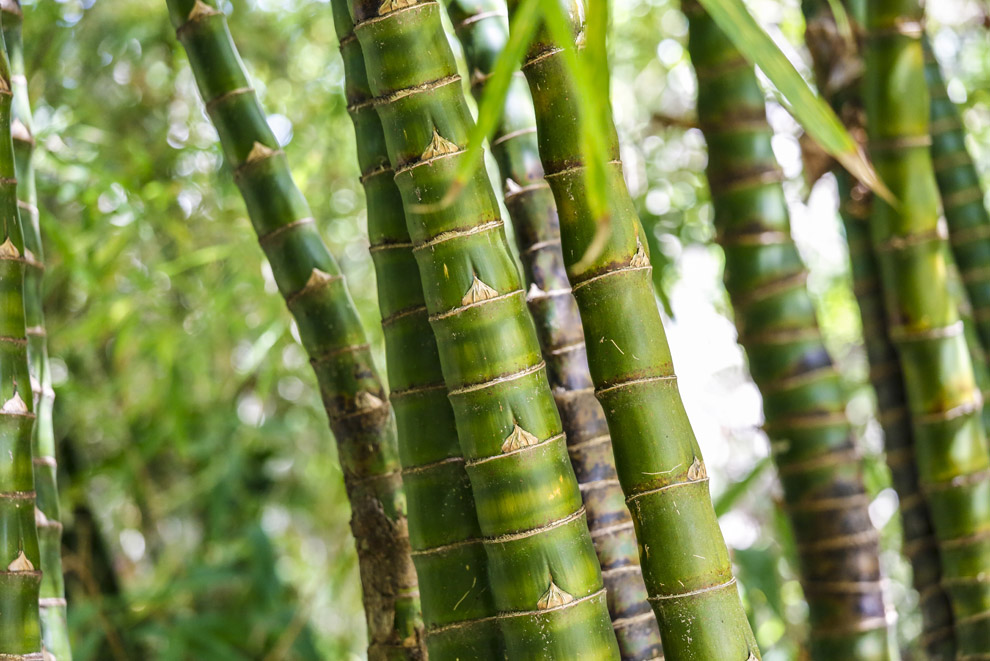
Bamboo culms (or stems) mature in just three years and can then be harvested every two years for nearly 120 years.
Because bamboo requires little investment, it is frequently used as a construction material in Asia.
Moreover, bamboo fibres are ten times stronger than wood fibres.
Much lighter and smaller, bamboo is widely used as a substitute for timber and widely used for making scaffolding in Asia.
Bamboo is also used to make paper, utensils, toothpicks, plywood, sculptures, baskets and fences, among many other items.
Some species have large spines, making them ideal for protective hedges.
Others produce tall, straight poles that act as perfect windbreakers and can be sustainably harvested every year.
Planting bamboo species in mountainous and deforested areas — where they can grow up to around 3,000 metres in altitude — helps retain water in the soil and reduces the risk of sudden flooding and landslides.
Despite their invasive nature, bamboos are increasingly used to remove dangerous pollutants from soils contaminated by wastewater or industrial waste.
The young shoots of all bamboo species, also known as bamboo shoots, are edible. They are eaten all over the world, particularly in Asia.
Harvesting must take place before the shoot reaches the light.
Early in the morning, gently walking over the soil in slippers, you can feel the shoots emerging at the surface.
Shoots are harvested every two to three days, using tools similar to asparagus gouges or small picks to gently lever and cut them a few centimetres below the ground.
They are more or less bitter depending on the species.
Certain shoots are particularly well suited for cooking, such as those from the Phyllostachys, Dendrocalamus and Bambusa genera, which are enjoyed fresh during the season (from early spring in Japan) and later preserved.